Asia FX Wrap: China GDP Misses, Korea Surges, Oil Spikes on Iran Strikes
China's Q2 GDP cooled to 4.3%, its weakest in years, while Middle East escalation sent oil surging and Korean equities to circuit breakers.
China's economy is slowing faster than bulls wanted to admit. Q2 GDP clocked in at 4.3% year-on-year — missing the 4.5% consensus and marking the weakest growth pace in three and a half years. Quarter-on-quarter it matched expectations at 0.9%, but the annual miss is the number traders are pricing in. On top of that, new home prices fell for a fourth straight year in June, down 3.3% annually. The property drag isn't done.
Not everything out of Beijing was ugly. June retail sales printed at +1.0% year-on-year versus an expected decline of 0.1% — a genuine beat. Industrial output also surprised to the upside at +5.3% versus the 4.6% forecast. So you've got a split picture: consumer demand holding on, housing still bleeding, and headline growth rolling over. Trade accordingly.
Read more HiTech Minerals CEO to Discuss McDermitt Lithium Project and Nasdaq Debut →
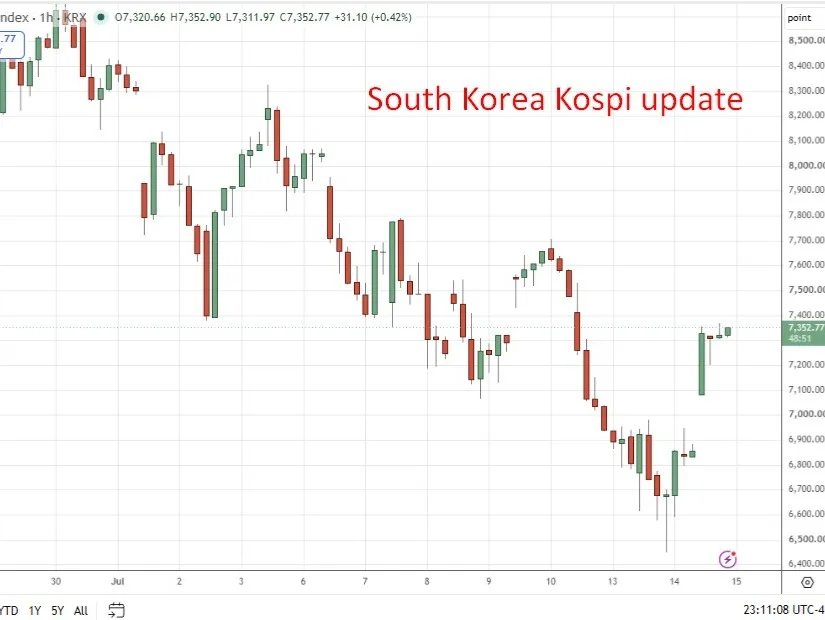
Korea was the session's wildcard. SK Hynix ripped 12%, and the Kospi and Kosdaq futures surged so hard the Korea Exchange had to halt trading twice. That's the kind of momentum you don't fade without a catalyst. Nikkei also gained but held back — traders there are waiting on ASML earnings before committing.
The Middle East is the macro wildcard you can't ignore right now. US forces struck dozens of Iranian military sites near the Strait of Hormuz. Iran retaliated by hitting US bases in Bahrain, Kuwait, and Jordan. Oil prices jumped to a one-month high. Goldman Sachs noted Gulf states are racing to pipeline oil around Hormuz, which could protect most exports — but that's a slow-moving hedge against a fast-moving conflict. Trump confirmed the US has been in talks with Iran and is pushing for a deal, but the shooting hasn't stopped.
Elsewhere, the PBOC fixed USD/CNY at 6.7910, basically in line with estimates. New Zealand retail sales decelerated sharply to +1.3% annually from +3.3% prior. Japan's Reuters Tankan showed split business sentiment as Middle East risk lingers, and the Bank of Japan's next rate hike hinges on whether price increases prove sticky. A lot of moving parts — stay nimble. Continue reading at Forexlive.